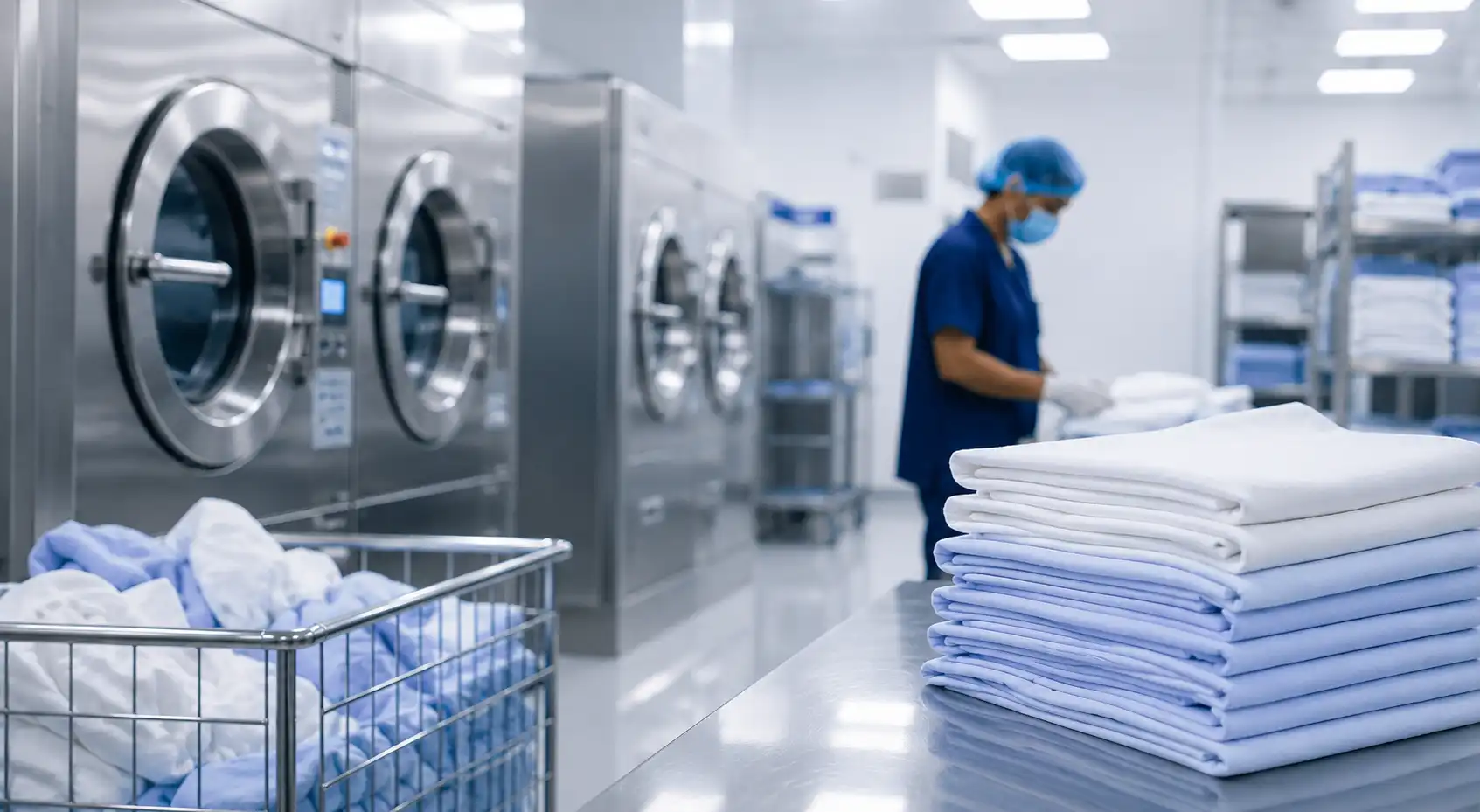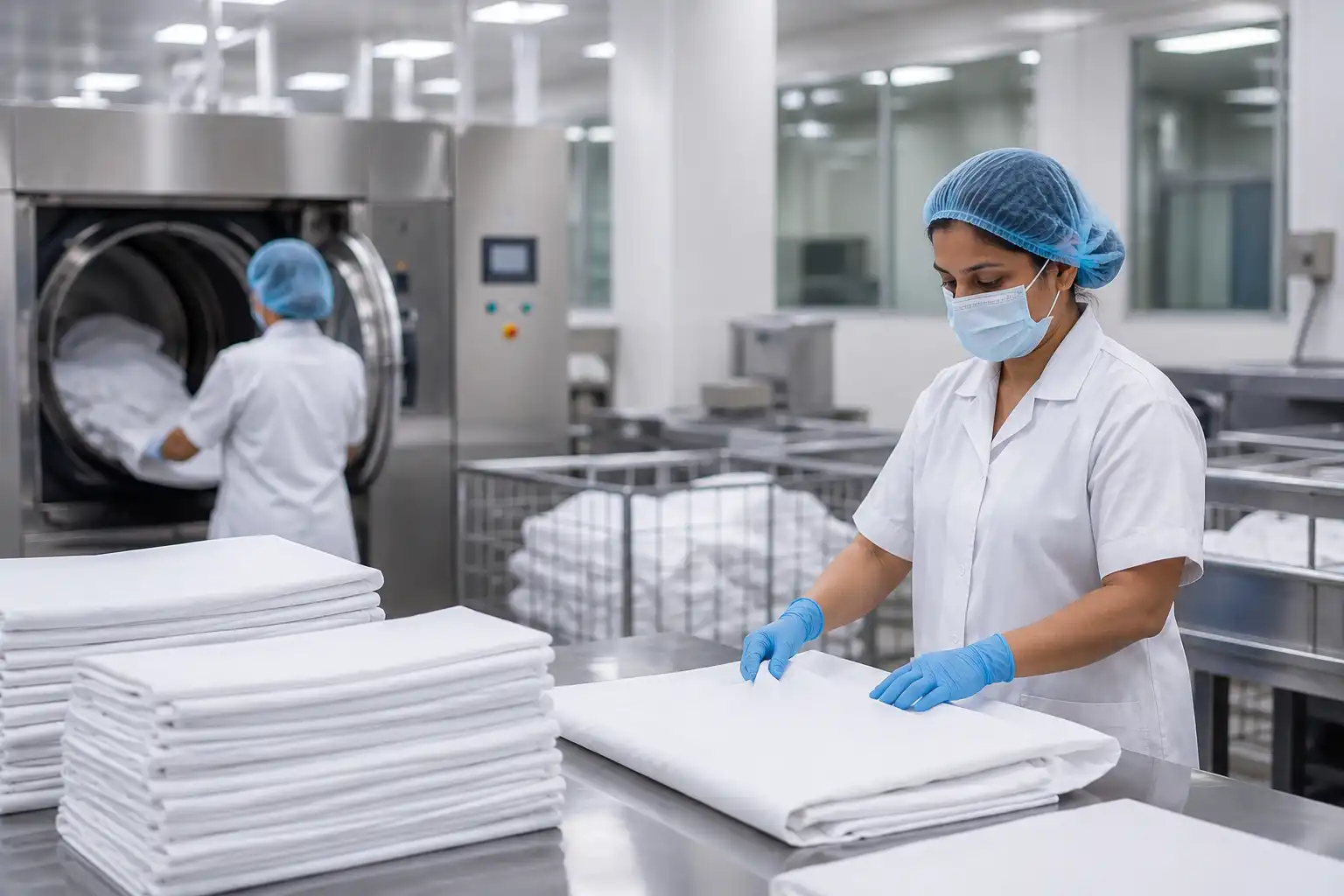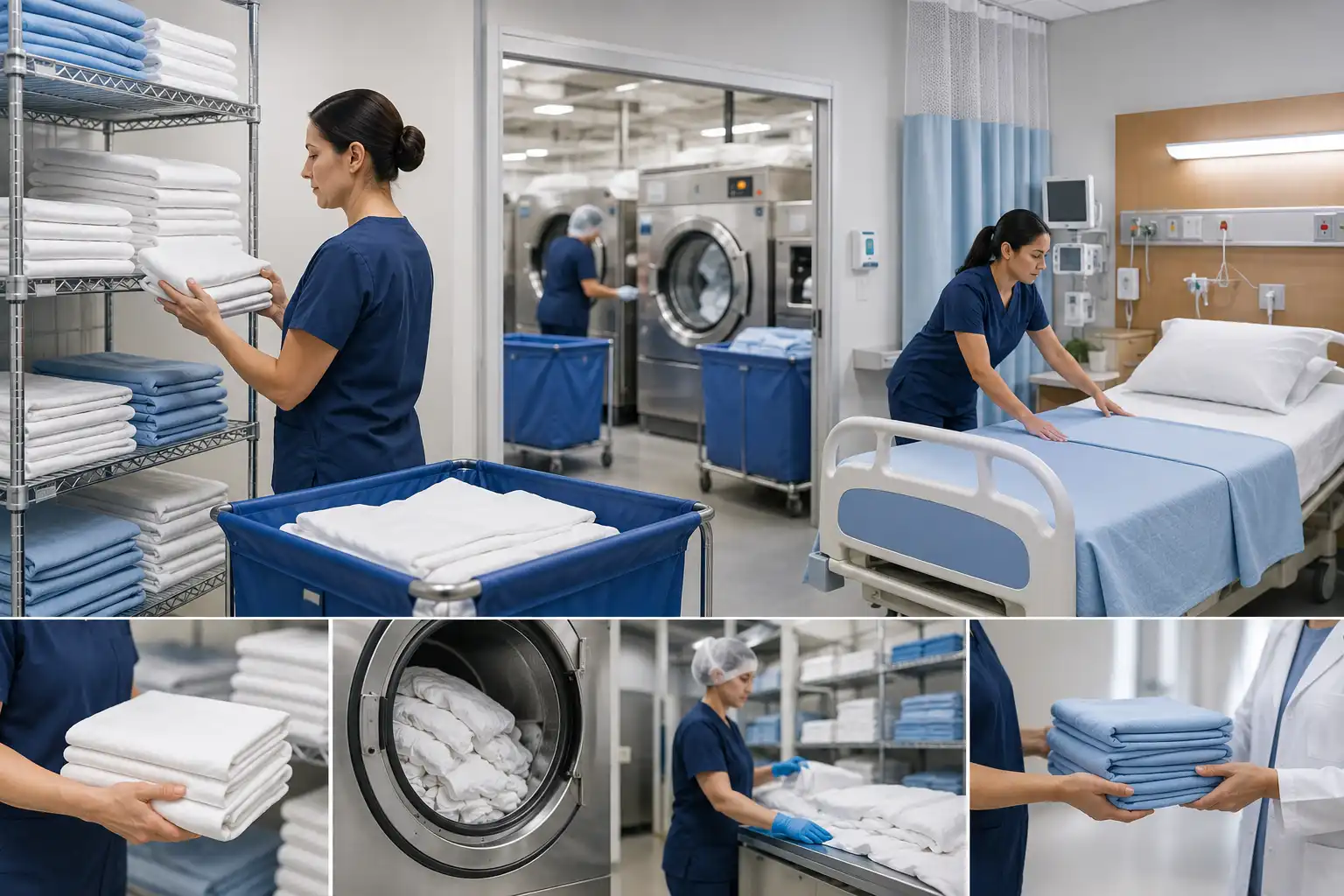
Choosing a healthcare linen management services provider is not the same as choosing any other outsourced vendor. The stakes are different. In a hospital, linen touches patients directly, moves through clinical environments continuously, and carries real infection control implications if it is not processed correctly.
A provider who delivers inconsistently, cuts corners on disinfection protocols, or cannot scale during a surge does not just create an operational headache. They create a patient safety risk. That is a very different category of vendor problem.
Most hospitals evaluating their laundry arrangements focus heavily on price. Price matters, but it is only one variable in a decision that has far more dimensions than cost. This blog covers what those dimensions are and what to look for in each one, so the choice is made on the right criteria.
Start with Infection Control Credentials, Not Price
The first question to ask any prospective hospital laundry services provider is not what they charge per kilogram. It is how they validate that their wash cycles actually disinfect.
Healthcare linen processing requires validated thermal or chemical disinfection, not just cleaning. There is a difference between linen that looks clean and linen that has been processed in a way that eliminates pathogens. A provider should be able to tell you the specific wash temperatures they use for different linen categories, which disinfection standards they follow, and how they document compliance.
If they cannot answer this clearly, or if they treat the question as unusual, that tells you something important about how seriously they take the clinical dimension of what they do.
What to ask:
- What wash temperatures do you use for OT linen, ICU linen, and general ward linen?
- Do you operate a barrier laundry system with physical separation between soiled and clean zones?
- What disinfection standards do your processes align with?
- Can you provide documentation of your wash cycle parameters?
Understand How They Handle Soiled Linen Collection
Infection control does not begin at the washing machine. It begins the moment soiled linen is collected from the ward. How a provider handles that first step reveals a great deal about whether infection control is genuinely built into their operation or just claimed in their brochure.
Soiled linen should be collected in colour-coded, leak-proof bags that segregate contamination levels. Highly infectious linen from isolation wards or OTs should be handled through a separate workflow entirely. Staff collecting soiled linen should be trained in safe handling protocols and equipped with appropriate PPE.
Ask specifically about how they manage linen from high-risk areas. A provider who gives you a generic answer about collection schedules without addressing contamination segregation has not thought carefully enough about the clinical context they are operating in.
Capacity and Reliability Under Pressure
Hospital linen volumes do not stay constant. An outbreak, a mass casualty event, or a surge in admissions can push linen demand well beyond normal levels with very little warning. The question is not whether your provider can handle your average daily volume. It is whether they can handle your worst week.
A provider with a single processing facility and no capacity buffer is a risk. If their plant goes down for maintenance, if a key piece of equipment fails, or if multiple large clients experience a simultaneous surge, your hospital's linen supply is at the back of a queue it did not know it was joining.
Look for providers with processing capacity that meaningfully exceeds their committed volume, backup arrangements in case of equipment failure, and a track record of maintaining service levels during high-demand periods. Ask for references from clients who have been through a surge and see what they say.
What to ask:
- What is your total processing capacity and what percentage is currently committed?
- What happens to our service if your plant has a major equipment failure?
- Can you share examples of how you have managed volume surges for existing clients?
Linen Inventory Visibility and Tracking
Hospitals that cannot see their linen inventory cannot manage it. Linen goes missing, accumulates in the wrong departments, or stays in circulation past its useful life because no one has the data to make better decisions.
A good hospital linen management provider brings tracking capability to the arrangement. Whether through RFID tagging, barcode systems, or structured count-based reporting, you should be able to see how much linen is in circulation, how much is in processing, which wards are running low, and how many wash cycles each item has completed.
This visibility serves multiple purposes. It reduces shrinkage by making losses immediately visible rather than discovered during an annual audit. It supports par level management so wards always have what they need. And it generates the documentation that accreditation audits increasingly expect to see as evidence of structured linen management.
Providers who manage linen informally, without any system for tracking movement or condition, are managing your inventory blind. That is not acceptable for a clinical resource.
NABH Readiness and Compliance Documentation
If your hospital is NABH accredited or working toward it, your linen management provider is part of your compliance picture. NABH standards include specific requirements around linen segregation, handling protocols, wash parameters, storage conditions, and documentation. A provider who cannot produce evidence of their processes on request is a liability during an audit.
The best providers have their own documented protocols that align with healthcare accreditation requirements and maintain continuous records rather than reconstructing them before an inspection. Ask specifically what documentation they generate as part of their standard operation and how it can be accessed or shared with your quality and compliance teams.
What to ask:
- Do you have documented SOPs for healthcare linen handling and processing?
- What records do you maintain and how are they made available to clients?
- Have you supported NABH accreditation assessments for other clients?
On-Premises vs Off-Site Processing: Know What You Are Agreeing To
Healthcare linen management services typically come in two structural models. In the first, linen is collected from the hospital and processed at the provider's central facility. In the second, the provider sets up and operates a laundry facility within the hospital premises itself.
Each has genuine advantages. Off-site processing means the provider's facility handles everything and the hospital carries no infrastructure. On-premises processing means faster turnaround, no linen leaving the facility, and greater operational visibility for the hospital's own teams.
What matters is that you understand clearly which model is on offer, what the handoff points are, how linen is transported in the off-site model, and who carries responsibility for linen in transit. These are not details to leave vague in a service agreement.
Do Not Overlook the Linen Rental Option
Many hospitals evaluate laundry processing as a standalone service and separately manage their linen procurement and lifecycle. This creates two separate cost centres and two separate management responsibilities, neither of which is particularly efficient.
A provider that offers linen rental alongside processing covers both. The provider owns the linen inventory, maintains it, replaces items as they reach end of life, and handles all procurement. The hospital pays a single service fee and receives clean, quality-assured linen on a consistent schedule without carrying capital expenditure or replacement costs.
For hospitals that want to simplify vendor management and convert an unpredictable procurement cost into a predictable service fee, this combined model is worth evaluating seriously alongside standalone processing arrangements.
What to Expect from Quick Smart Wash
Built specifically around the demands of clinical environments, Quick Smart Wash provides healthcare linen management services to hospitals across India through validated disinfection protocols, barrier-based processing systems, and healthcare-grade chemistry. Every dimension of their operation is designed for the infection control standards that patient safety requires.
Linen tracking through RFID tagging gives hospitals real-time inventory visibility and generates the compliance documentation that NABH assessments require. Linen rental options eliminate procurement and lifecycle management costs entirely, converting linen into a fully managed service.
For hospitals that want processing on-site, Quick Smart Wash sets up and operates a fully managed laundry plant within the hospital premises, covering all capital expenditure, equipment, staffing, and operational management. For those that prefer off-site processing, linen is collected, processed at their central processing units, and returned fully finished and ward-ready.
The Decision Deserves More Than a Price Comparison
Selecting a hospital linen management provider is a decision that affects infection control, patient safety, clinical operations, and accreditation standing all at once. Evaluating it primarily on cost misses most of what matters.
The right provider demonstrates validated hygiene processes, structured collection protocols, genuine capacity to absorb demand surges, meaningful inventory visibility, and compliance documentation that holds up under scrutiny. These are the criteria that protect patients and protect the hospital's ability to deliver safe care.
Take the time to ask the right questions. The answers will tell you a great deal more than the rate card will.