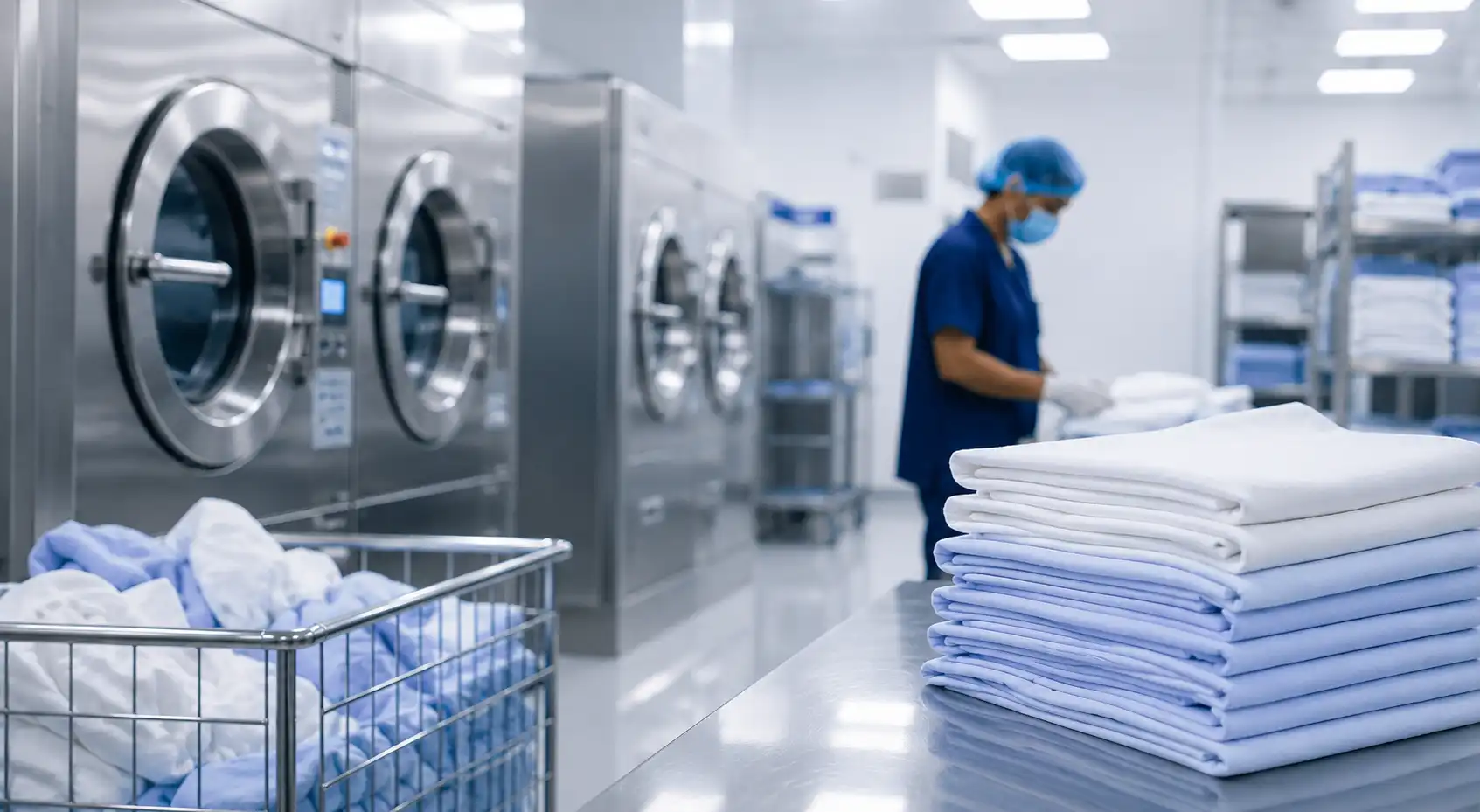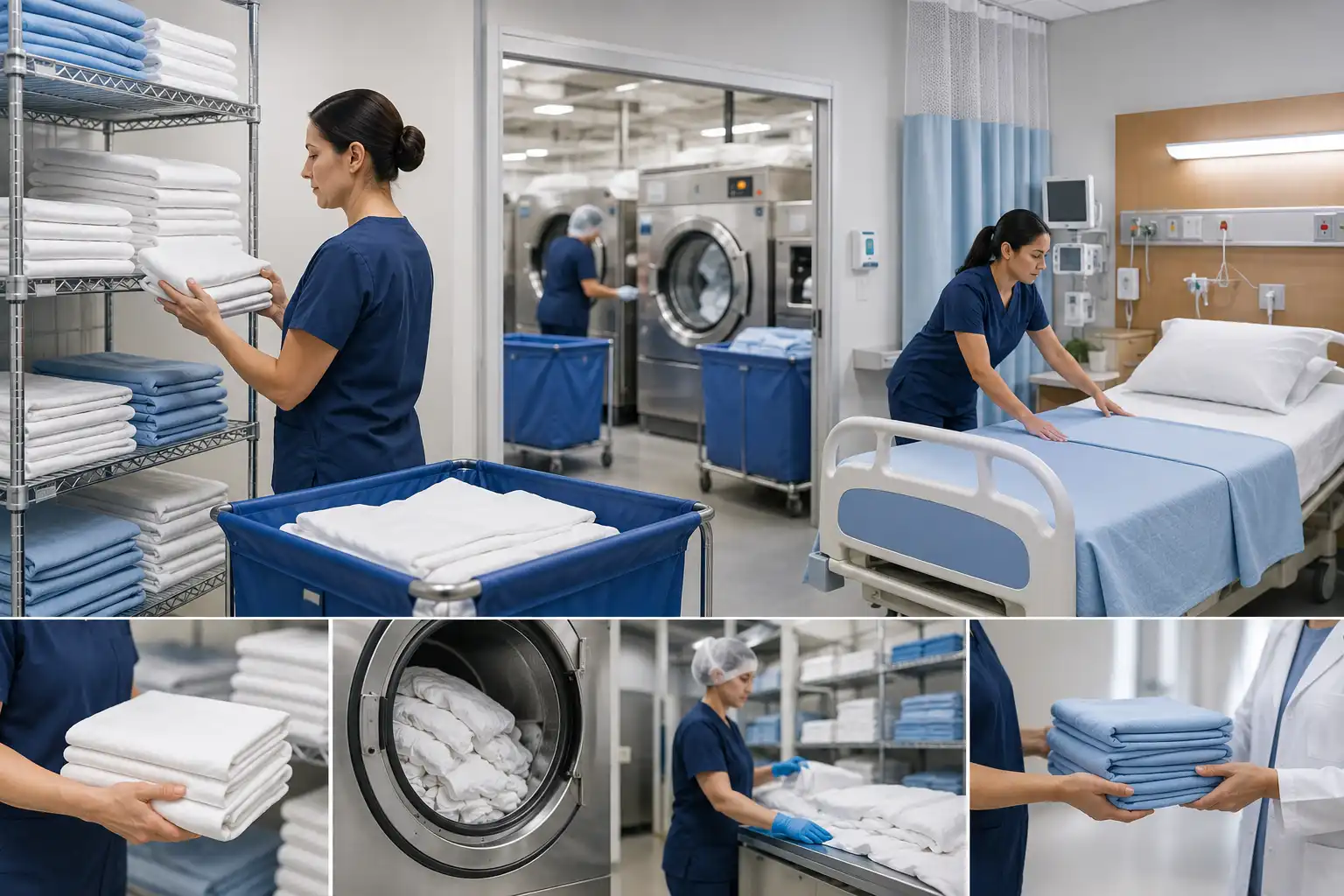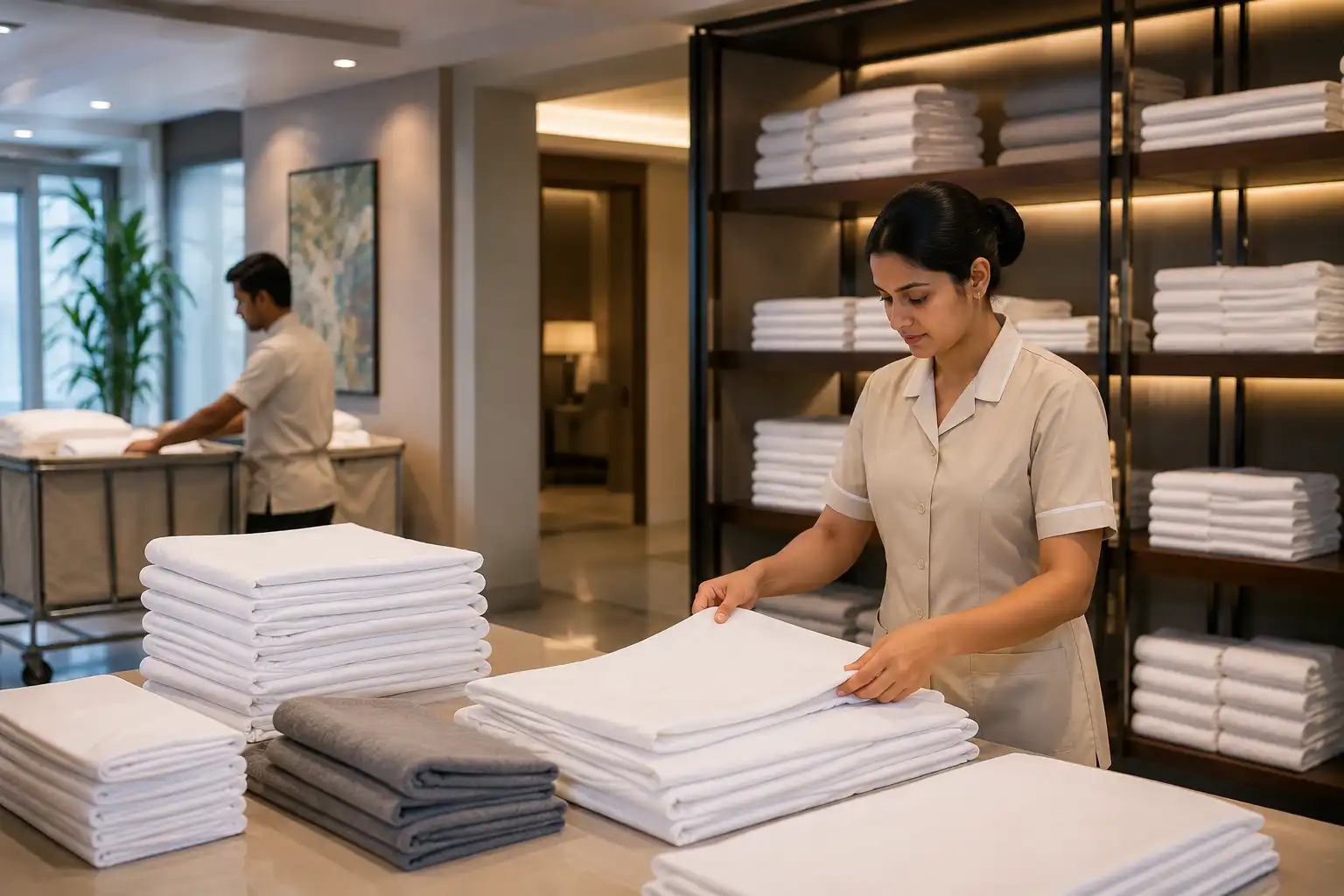
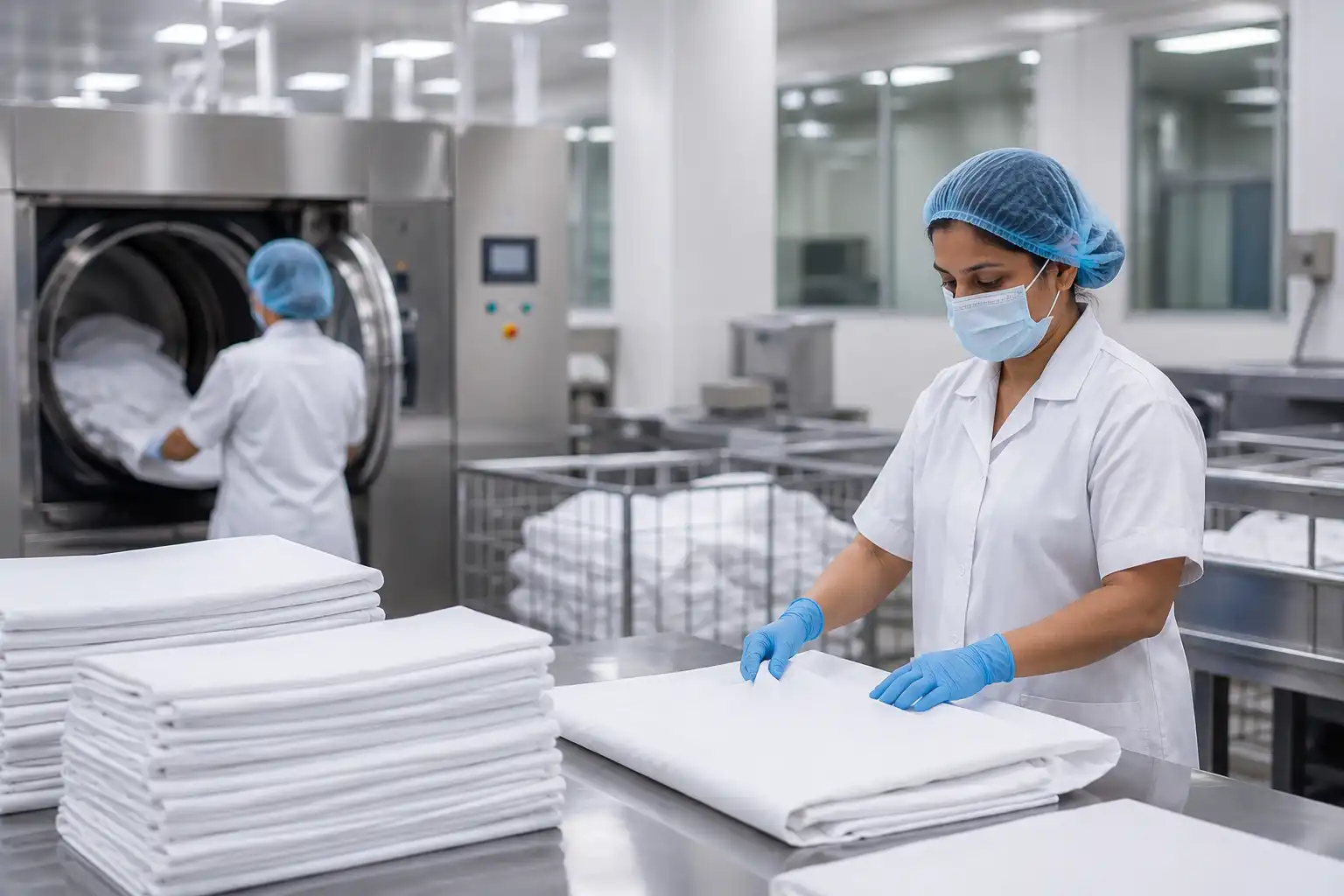
In a hospital, everything that touches a patient is a clinical decision. The gloves. The instrument. The drape in the OT.
And the sheet on the bed.
That last one rarely gets the same seriousness, but it should. Linen management is not housekeeping. It is frontline infection control. Here are the seven tips that separate hospitals that get it right from those quietly carrying the risk.
Tip 1: Every piece of used linen is infectious until proven otherwise
It does not matter which ward it came from or whether it looks soiled. Pathogens are invisible. The only safe assumption is that all used linen is contaminated until it has completed a verified wash cycle — immediate bagging, no shaking in the air, zero contact with clean linen.
What good looks like: role-based training for every staff member who handles linen, with regular refreshers rather than a one-time induction.
Tip 2: Segregation is the system, not a suggestion
Clean and soiled linen must never share a trolley, a route, or a pair of hands without a handwash in between. Ward-wise linen distribution works only when this is enforced from collection to delivery — not just on paper, but in practice, during every shift change and every transport run.
What good looks like: physically separated clean and soiled zones, colour-coded bags, dedicated trolleys, and no shortcuts during peak hours.
Tip 3: Know what you have and where it is
Most hospitals discover linen shortfalls at 6 a.m. when a ward calls in a panic. Medical linen inventory control means knowing in real time how much linen is in each ward, what is in laundry, what is in transit, and what is due for replacement. Without this, hospitals over-order, under-track, and retire linen far too late.
What good looks like: hospital linen inventory management driven by data, not instinct. Par levels set by ward census, not habit.
Tip 4: Track linen through its entire life — not just when it goes missing
Hospital linen has a lifespan of 200–300 wash cycles. After that, its hygiene reliability degrades. Most hospitals have no idea where any given piece sits in that count. Hospital linen lifecycle management means every wash is logged, every ageing piece is flagged, and nothing gets pulled only when it looks bad.
What good looks like: RFID hospital linen tracking solutions that record wash history per piece so retirement decisions are driven by data rather than eyeballing.
Tip 5: Store clean linen like the clinical asset it is
Clean linen gets re-contaminated in storage more often than anyone talks about — open shelves in busy corridors, linen near waste zones, staff touching it without prior hand hygiene. Clean linen belongs in enclosed, designated storage. Covered. Rotated. Used within 24–48 hours of ward delivery.
What good looks like: sealed packaging on delivery, dedicated enclosed storage at ward level, and no open carts.
Tip 6: Verify the wash — do not just assume it
Sending linen out and assuming it comes back clean is not a protocol. Complete linen lifecycle management services include documented proof — wash temperatures, cycle times, chemical records, batch logs — for every load. This is what NABH requires, and it is what separates a professional outsourced linen management partner from a generic vendor.
What good looks like: wash documentation delivered as standard. Linen processing records available on demand, for any batch, at any audit.
Tip 7: Put one person in charge — specifically
Most linen failures trace back to one thing: nobody owned the whole system. Infection control owned the protocol. Housekeeping owned collection. Procurement owned purchasing. Nobody owned end to end. Comprehensive hospital linen management needs a single named owner in-house or through the linen partner who monitors, escalates, and is accountable.
What good looks like: one owner. Not a committee. Not shared responsibility.
The gap is never knowledge — it is execution
These tips are not complicated. What they require is a decision: to treat linen as a clinical function, not a back-of-house chore. For hospitals in Jaipur working toward or maintaining NABH accreditation, the framework already demands this. The right linen management partner does not just handle the washing. They handle the systems, tracking, documentation, and accountability that make these tips a functioning programme, not just a checklist.
Turn this checklist into a working programme — connect with Quick Smart Wash to bring documented, NABH-ready linen management to your facility.