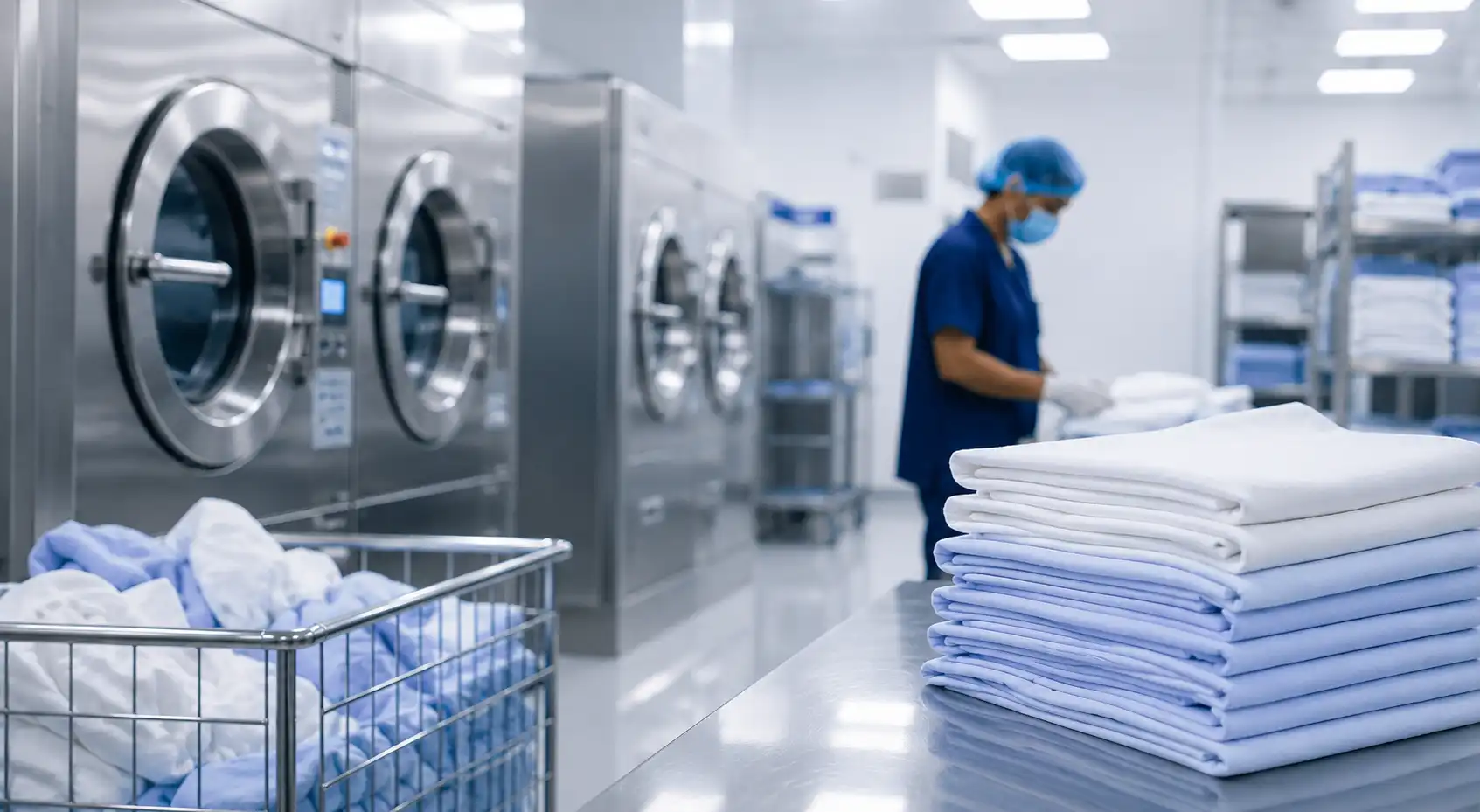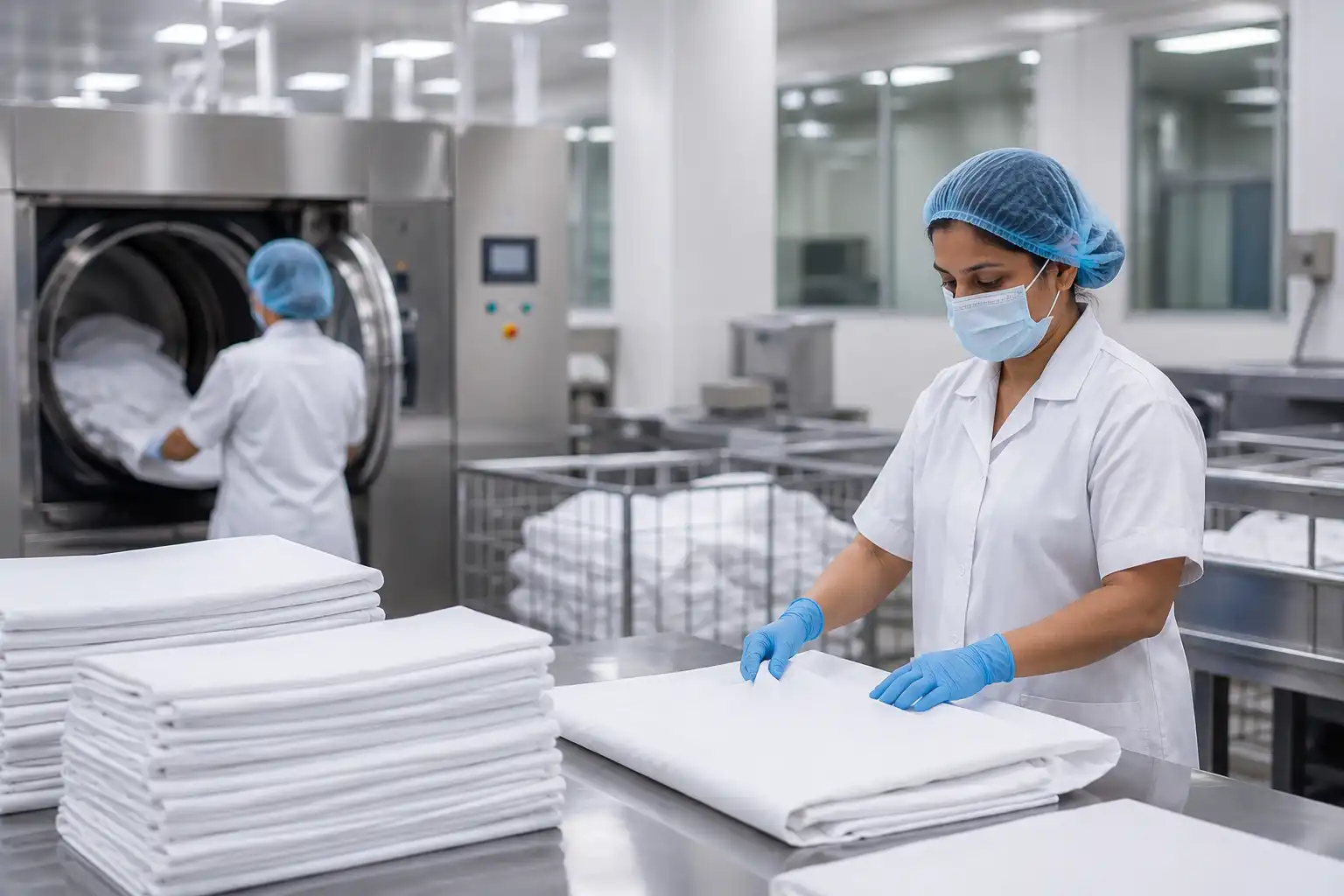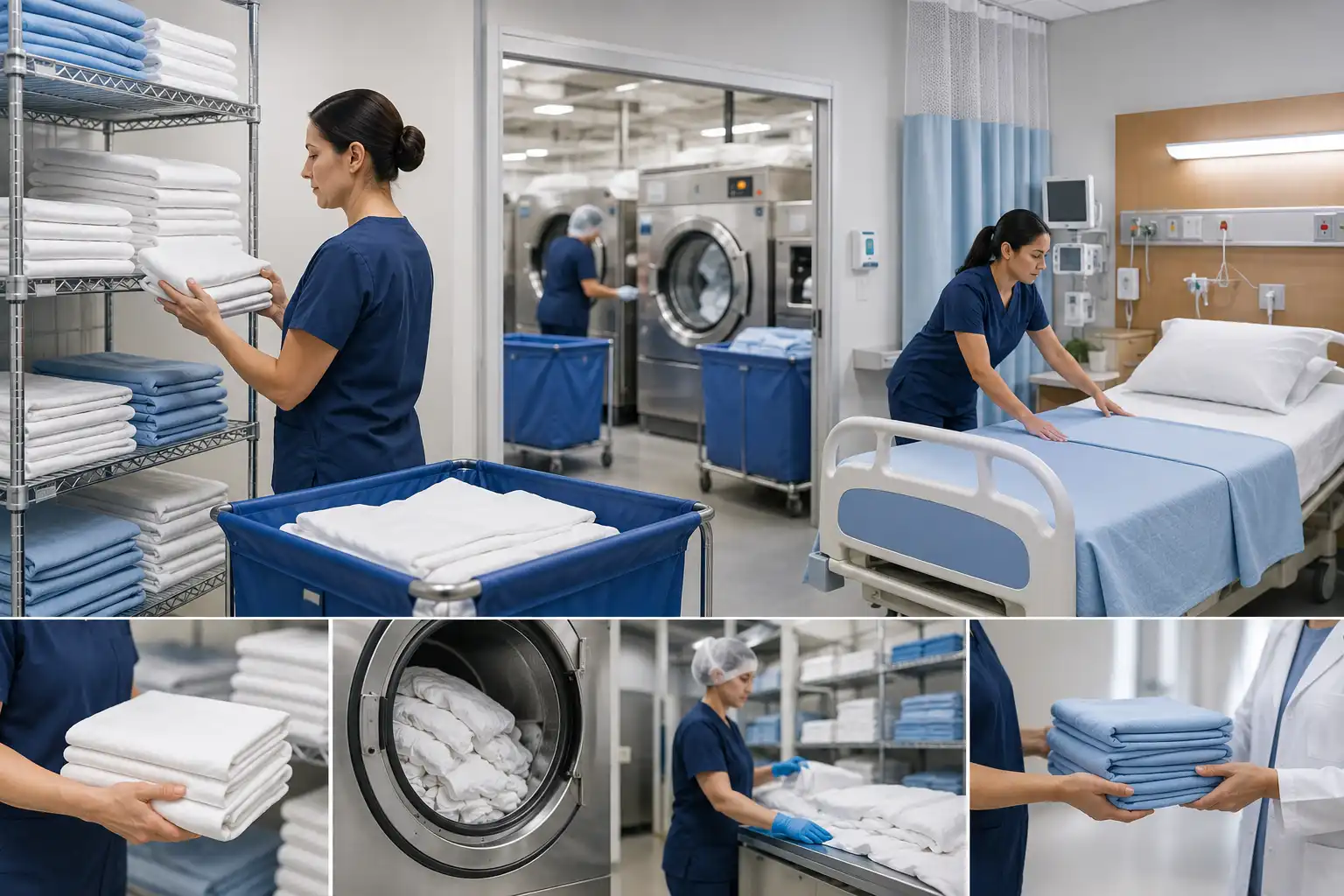
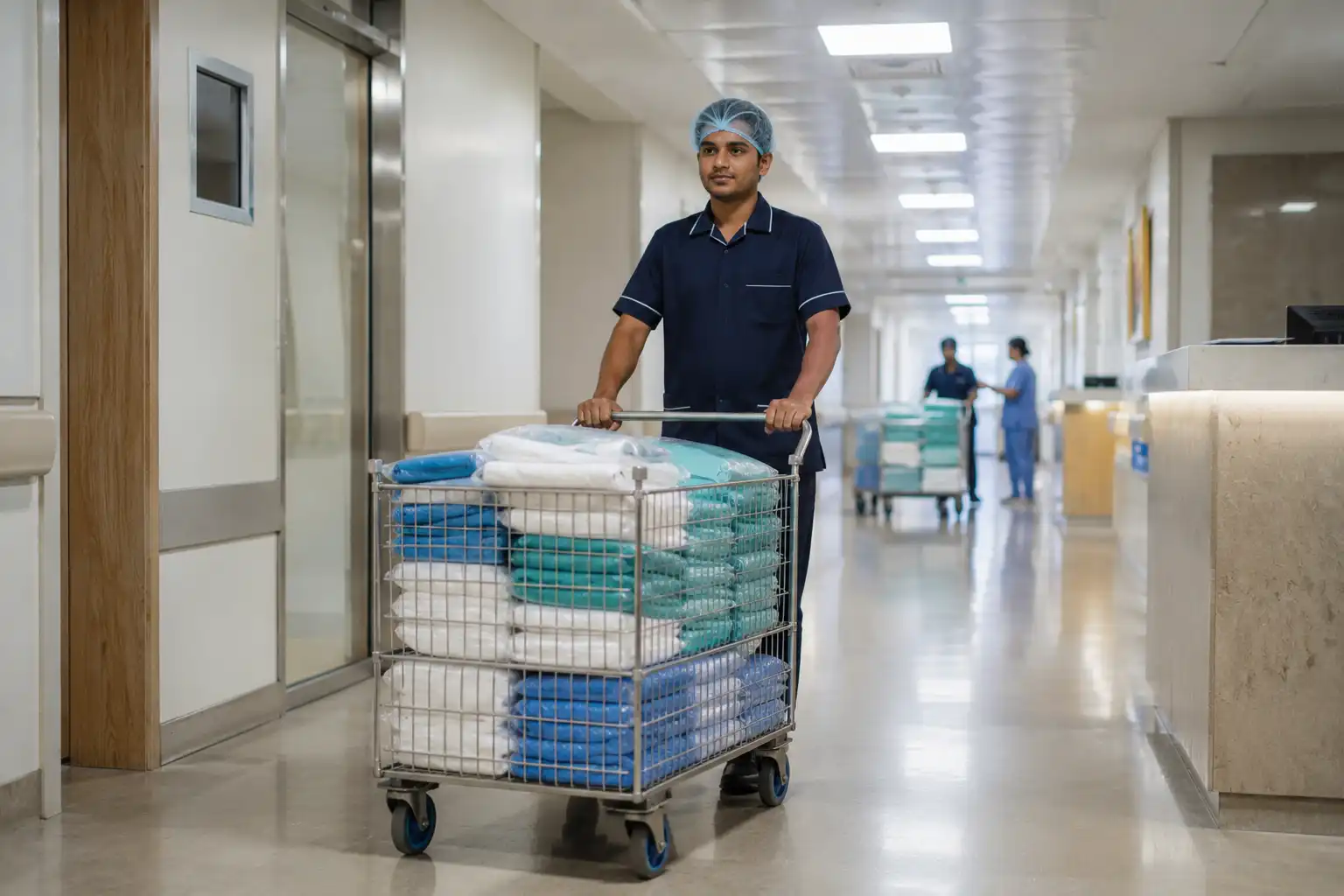
A nurse walking into a supply room and finding exactly what she needs, in the right quantity, ready for use, does not happen by accident. It is the result of a linen distribution system that has been set up to track demand, manage par levels, and deliver the right linen to the right ward at the right time, consistently.
In most hospitals, this does not happen often enough. Linen ends up in the wrong departments. Some wards run short while others accumulate excess stock they do not need. Staff spend time chasing clean gowns or sheets when they should be focused on patients. The problem is rarely a shortage of linen in the hospital overall. It is a distribution problem.
Ward-wise linen distribution services address this directly. This blog covers what they involve, why they matter, and what best practices look like when the system is working as it should.
Why Generic Linen Distribution Fails Large Hospitals
Large hospitals are not uniform environments. A general ward has different linen requirements from an ICU. An operation theatre needs specific drapes and gowns that are categorically different from what a maternity ward uses. A paediatric ward requires different linen sizes and types from an orthopaedic unit.
When hospitals treat linen distribution as a single pooled operation, with all clean linen going to a central store from which wards collect what they need, the system breaks down predictably. Faster-moving wards collect more than they need. Slower wards run short. OT-specific items end up in general wards and vice versa. The central store becomes a free-for-all that nobody can accurately track.
Effective linen management for hospitals requires the distribution layer to be as structured as the processing layer. Each ward needs a defined allocation based on its actual consumption, delivered on a schedule, with visibility into what has been issued, what is in use, and what needs to be replenished.
What Ward-Wise Linen Distribution Services Actually Involve
Ward-wise linen distribution services go well beyond moving clean linen from the laundry to the ward. A structured service covers the following:
Ward-Specific Par Level Setting
Each ward is assessed for its actual linen consumption based on bed count, occupancy patterns, and linen type requirements. Par levels are set for each linen category per ward so that the right quantity is always available without creating excess that degrades in storage or gets misused.
Scheduled Delivery to Each Ward
Rather than wards sending staff to collect linen from a central store, linen is delivered directly to each ward on a fixed schedule. Deliveries are timed to align with shift changes and peak demand periods, ensuring clean linen is available before it is needed rather than being sourced reactively when a shortage has already occurred.
Soiled Linen Collection from Each Ward
The distribution service runs in both directions. Soiled linen is collected from each ward on a defined schedule, segregated by contamination category, and moved through the processing cycle. Collection is documented so that the quantity collected from each ward can be tracked against the quantity distributed, making any discrepancy immediately visible.
Distribution Records and Inventory Visibility
Every delivery and every collection is logged, either through RFID scanning, barcode tracking, or structured count-based records. This creates a running inventory picture for each ward, showing what is in stock, what is in the wash, and what needs to be replenished. Administrators and housekeeping teams have visibility without having to conduct manual counts.
The Benefits of Getting Distribution Right
The operational and clinical benefits of structured ward-wise linen distribution services are wide-ranging and compound across multiple areas.
No More Ward Shortages at Critical Moments
When distribution is based on real consumption data and delivered on schedule, wards stop running out. The scramble to find a clean gown before a procedure, or a fresh sheet during a high-occupancy night shift, disappears. Nursing staff can focus on patients instead of logistics.
Reduced Linen Loss and Misrouting
One of the most common sources of linen loss in hospitals is linen moving to the wrong department and never being recovered. Ward-wise distribution with tracking records makes this immediately visible. When OT drapes show up in a general ward count, the system flags it. Misrouting stops being a quiet ongoing loss and becomes a correctable exception.
Better Compliance Documentation
NABH accreditation requires evidence of structured linen management for hospitals, including distribution records. When ward-wise distribution is tracked systematically, this documentation exists as a standard output of the operation. Audit preparation stops being a scramble to reconstruct records and becomes a matter of retrieving data that was generated continuously.
Infection Control Consistency
Structured ward-wise delivery ensures that linen is transported from the laundry to the ward in a controlled, protected manner. Clean linen does not pass through soiled collection areas. Ward-specific allocation means high-risk linen categories do not accidentally enter general ward circulation. The hygiene chain from processing to patient contact is maintained across the entire distribution pathway.
Staff Time Redirected to Patient Care
When linen arrives at the ward on schedule and in the right quantities, nursing and housekeeping staff stop spending shifts managing linen logistics. That time and attention goes back to where it should be. The supply room stays organised. The count stays accurate. And the team stays focused on patients.
Best Practices for Ward-Wise Linen Distribution
Whether managed in-house or through an outsourced healthcare linen management partner, the following practices consistently separate effective distribution from ineffective distribution.
-
Set par levels on actual data, not estimates. Par levels that are guessed rather than calculated from real consumption data will always be wrong. Track actual usage per ward over a representative period, then set par levels accordingly. Review and adjust when ward configurations or occupancy patterns change.
-
Use a closed-loop distribution model. Clean linen delivered to a ward should be logged in. Soiled linen collected from the same ward should be logged out. The difference between the two over time tells you exactly what is missing, what is in use, and what has been lost. Any distribution system that does not close this loop is operating partially blind.
-
Align delivery schedules with clinical demand patterns. Delivering linen at 2am to a ward that needs it at 6am before the morning shift is not effective scheduling. Understand when each ward's peak demand occurs and time deliveries accordingly. OT-specific deliveries should align with the theatre schedule, not a generic hospital-wide rotation.
-
Segregate linen categories at the distribution stage. Different wards require different linen types. Distribution should sort by category before delivery, not after. Sending a mixed batch to a ward and expecting housekeeping staff to sort it is inefficient and increases the risk of the wrong linen ending up in the wrong place.
-
Review distribution data regularly. Distribution records are only useful if someone is reviewing them. Monthly reviews of ward-wise consumption data, loss rates, and delivery accuracy allow the system to be adjusted before problems become entrenched. Consistent shortages or surpluses in a specific ward are signals that the par level or delivery schedule needs revisiting.
How Quick Smart Wash Manages Ward-Wise Distribution
Ward-wise linen distribution services are built into Quick Smart Wash's healthcare linen management model as a structured, tracked function rather than an afterthought. Each ward's linen requirements are assessed and par levels are set based on actual consumption data. Deliveries are scheduled to align with ward demand patterns, and soiled linen collection runs in parallel on a coordinated schedule.
RFID-based tracking gives both the Quick Smart Wash team and hospital administrators real-time visibility into what has been delivered to each ward, what has been collected, and what is currently in the processing cycle. Discrepancies are flagged before they become losses. Ward-level inventory records are maintained continuously and available for compliance reviews without any additional effort from hospital staff.
For hospitals that want all of this managed on-site, Quick Smart Wash sets up and operates a fully managed laundry and distribution facility within the hospital premises, covering all equipment, staffing, and operational management. For those using their central processing units, the distribution function is managed through a coordinated pickup and delivery operation that maintains the same structured, ward-level visibility.
Distribution Is Where Linen Management Either Works or Does Not
A hospital can invest in the best laundry processing in the world and still have wards running short if the distribution layer is not structured. Clean linen that ends up in the wrong department, or arrives at the wrong time, or accumulates in a central store that nobody tracks accurately, does not serve patients any better than linen that was never washed properly.
Ward-wise linen distribution services close the loop between processing and patient care. They are what make effective linen management for hospitals possible at scale, and they are where the difference between a functional linen operation and a genuinely well-run one becomes most visible.
If your hospital's distribution is still informal, reactive, or based on wards collecting what they can from a shared store, there is a better model available. The impact on ward operations, staff time, and compliance readiness is significant and measurable.