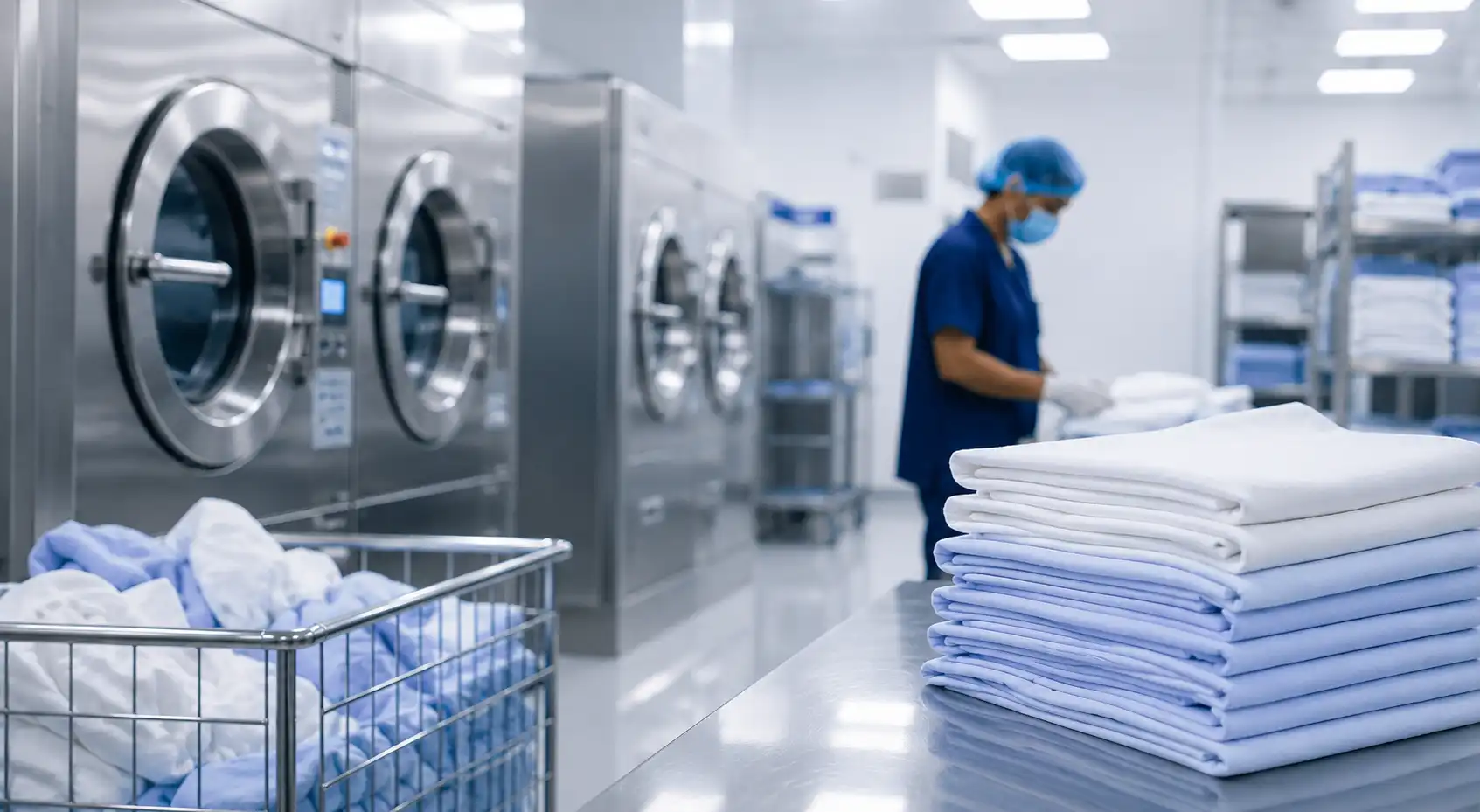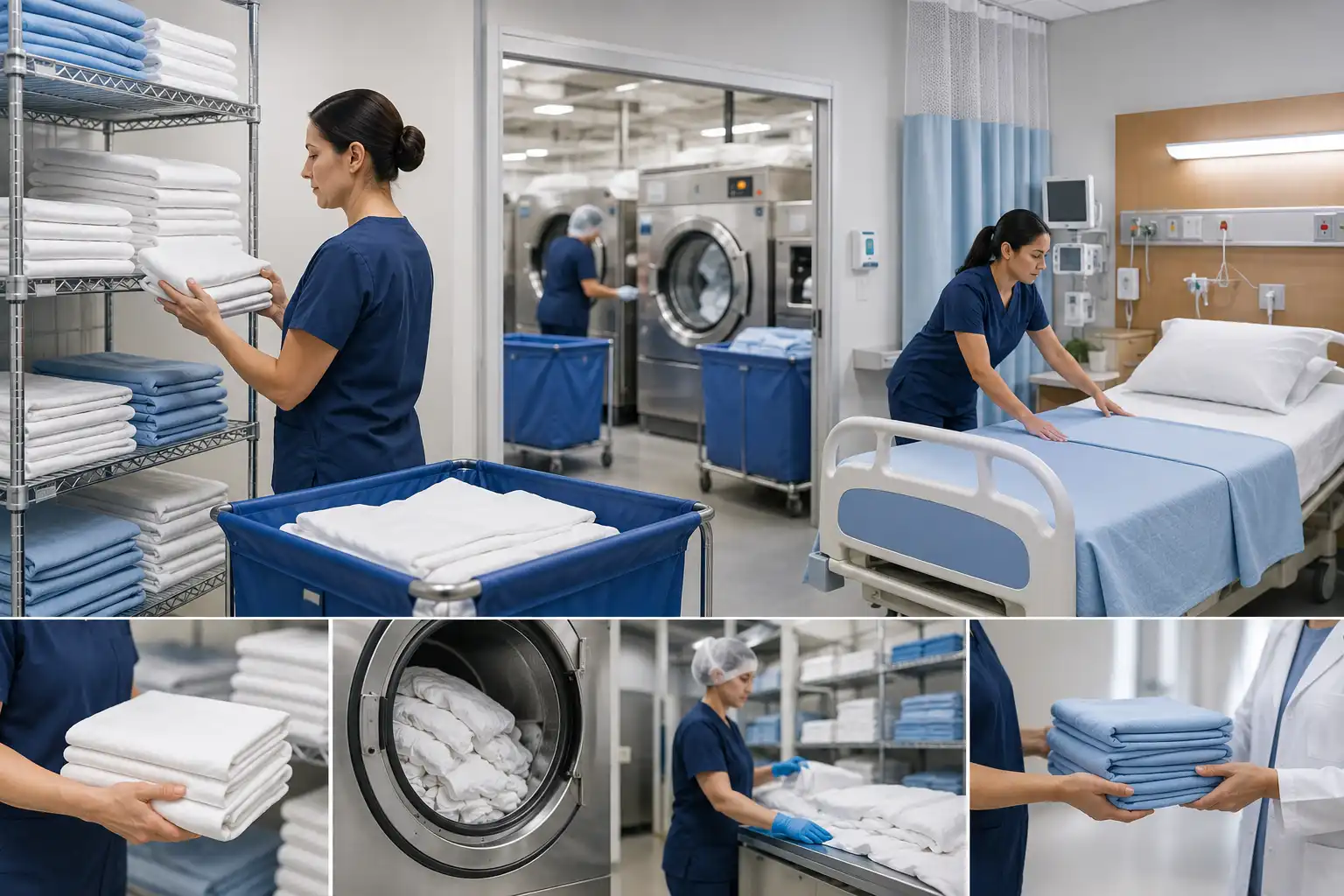
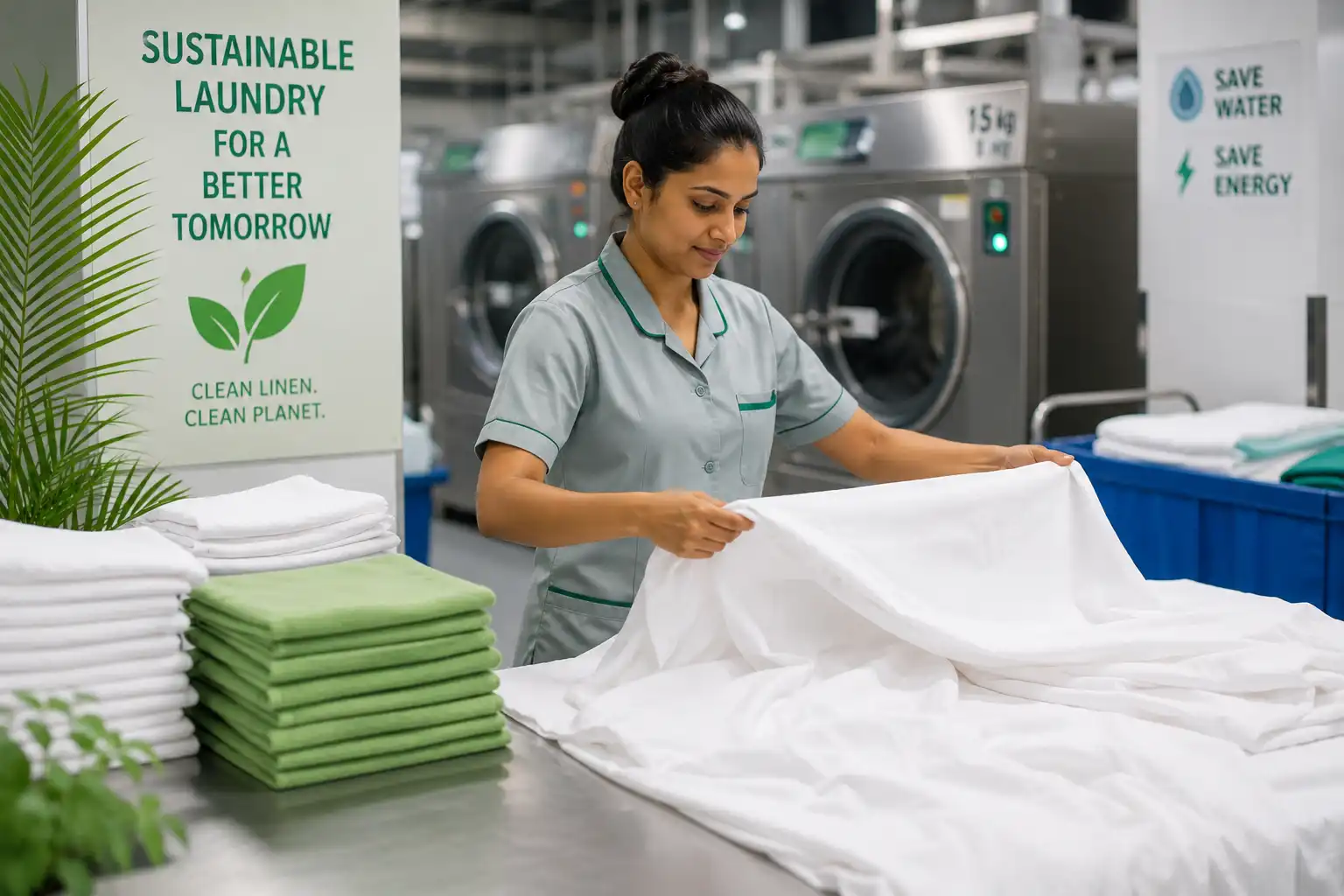
Large-scale laundry is resource-intensive. Water, energy, chemicals, and transport all feed into the process of keeping linen clean, and at the volumes that institutions generate every day, the environmental cost of that process adds up quickly.
For most of the industry's history, sustainability was treated as a secondary concern. The priority was throughput and cost. That calculation is shifting. Rising utility bills, regulatory pressure, ESG commitments, and growing stakeholder expectations are pushing organisations to look more carefully at how their laundry operations are run.
What is becoming clear is that eco-friendly laundry services are not just the responsible choice. In most cases, they are also the more efficient and financially sensible one.
The Environmental Cost of Conventional Laundry
A single large facility processing hundreds of kilograms of linen daily is drawing heavily on water, energy, and chemical inputs. Across hundreds of such facilities nationally, the cumulative impact is significant.
- High-temperature wash cycles consume large amounts of electricity or gas per load
- Conventional detergents discharge phosphates and persistent compounds into wastewater systems
- Diesel-powered delivery fleets add transport emissions to the facility's overall footprint
- Linen that degrades prematurely due to aggressive processing becomes textile waste sooner than it should
None of this is unavoidable. The right technology, process design, and equipment can address each of these without compromising hygiene or service quality.
Why Organisations Are Paying Attention Now
The pressure to act on sustainable laundry operations is coming from multiple directions at once. Accreditation bodies are including environmental practices in their assessment criteria. Institutional ESG reports now cover utility consumption and waste generation in detail. Clients and stakeholders are asking providers to demonstrate that their operations are being run responsibly, not just efficiently.
At the same time, the economics have shifted. Water and energy costs have risen consistently. Facilities that reduced their consumption five years ago are now seeing those savings compound. Organisations that did not are carrying a cost that is harder to absorb every year.
Choosing a commercial washing facility that has invested in eco-friendly infrastructure is increasingly a decision that makes sense on the numbers, not just on principle.
What Sustainable Laundry Operations Actually Involve
Sustainability in a laundry operation is not a single intervention. It is a combination of choices across energy, chemicals, water, equipment, and logistics that together reduce the footprint of the operation meaningfully.
Energy Source
Where energy comes from matters as much as how much is used. Moving from diesel to cleaner fuels and eventually to renewable sources cuts emissions at the source. Real-time monitoring lets operators track consumption and demonstrate compliance rather than estimate it.
Chemical Management
Enzyme-based, biodegradable detergents deliver the same cleaning performance as conventional chemicals without the downstream environmental damage. Auto-dosing technology ensures the right amount is used every time, eliminating the overuse that inflates both chemical costs and wastewater impact.
Water Recycling
Modern systems recover and reuse rinse water from one cycle in the pre-wash of the next. Smart cycle design with fewer rinse stages where contamination levels allow reduces total water draw without compromising hygiene. These two changes together can cut freshwater consumption dramatically.
Equipment Efficiency
Older commercial machines run at significantly higher water and energy consumption per kilogram than modern high-efficiency alternatives. The equipment a laundry facility uses is one of the clearest indicators of whether its sustainability commitment is operational or just marketing.
Delivery Fleet
Collection and delivery vehicles contribute meaningfully to a laundry operation's carbon footprint. Transitioning to electric vehicles reduces transport emissions on every route and lowers fuel and maintenance costs over the life of the fleet.
What Quick Smart Wash Has Already Built
The sustainability commitments at Quick Smart Wash are backed by infrastructure investments that are already operational, not just planned. Here is where things stand across each dimension.
Solar Power
- 125 kW of solar capacity is already powering their flagship plant
- Target of 5 MW across facilities by 2030
- Directly reduces energy costs and fossil fuel dependency at scale
Cleaner Energy and Emissions
- Shifted from diesel to LPG, significantly cutting CO2 emissions across processing operations
- Real-time energy monitoring tracks efficiency and supports compliance reporting
Smart Chemical Use
- Only enzyme-based, biodegradable detergents used across all operations
- Auto-dosing technology eliminates overuse and protects wastewater quality
- Gentler on garments, extending linen life across the processing cycle
Water Recycling
- 70 to 75 percent of processed water is recycled for reuse within the facility
- Smart wash cycles and reduced rinse stages lower total freshwater consumption
- Reduces dependence on groundwater sources in water-stressed regions
High-Efficiency Machines
- Lower water and energy consumption per kilogram compared to conventional equipment
- Designed for workforce safety and ergonomics, improving daily operating conditions
Green Fleet
- Active transition to electric vehicles across the delivery fleet
- Cuts transport emissions and reduce fuel and maintenance costs over time
- Positions logistics operations in line with ESG commitments and clean mobility goals
Sustainability Is Becoming a Selection Criterion
Organisations are increasingly being evaluated on the sustainability practices of their partners and vendors, not just their own operations. The laundry provider an institution works with is part of that picture.
Choosing eco-friendly laundry services backed by real infrastructure investment delivers something concrete to point to in accreditation reviews, ESG reports, and client conversations. It also tends to deliver better outcomes on cost, linen quality, and operational reliability because the same discipline that drives sustainability drives efficiency.
The organisations building these standards into their operations now will be better positioned when sustainability becomes the baseline expectation rather than the differentiator.